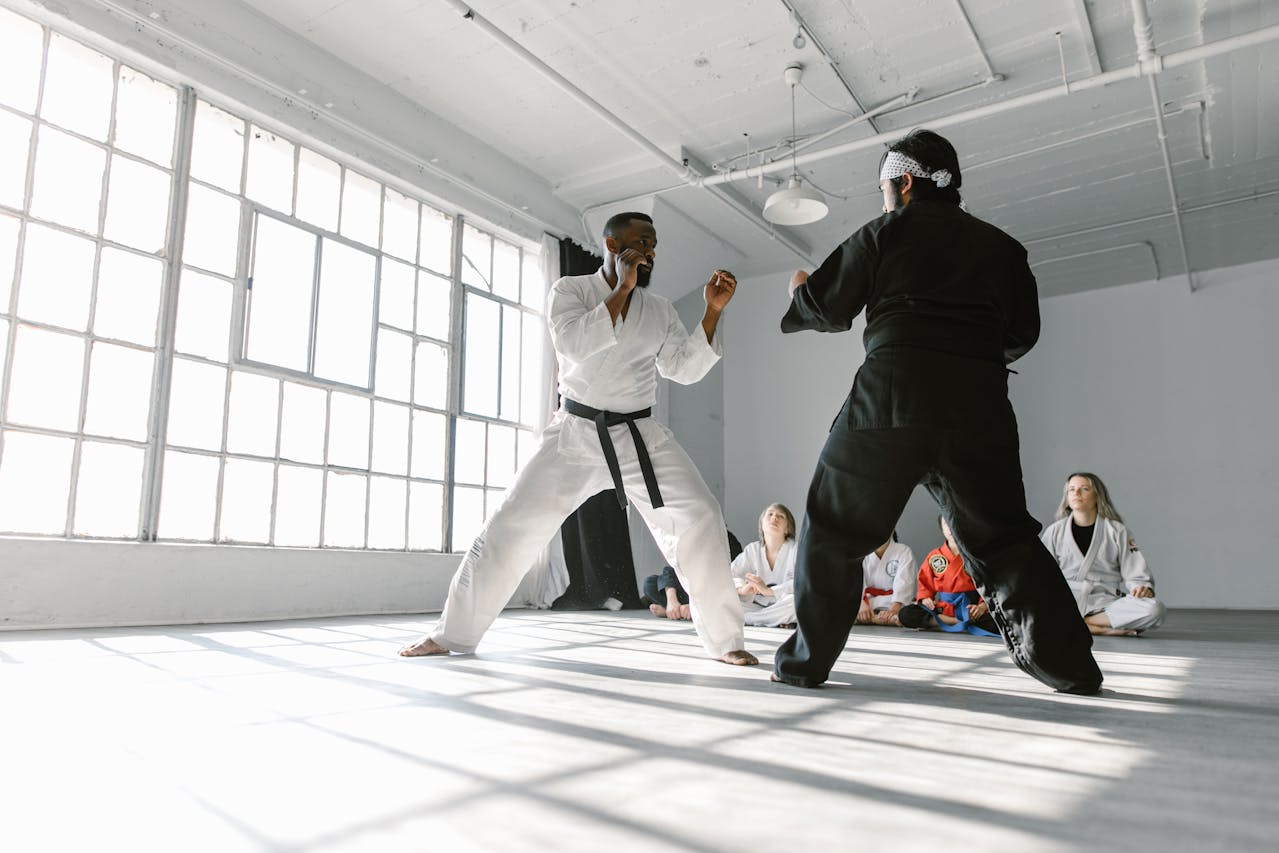
Jiu-Jitsu, the “gentle art,” offers a unique path to lifelong health, intertwining ancient techniques with modern wellness.
Story Snapshot
- Jiu-Jitsu’s philosophy of leverage over brute strength fosters lifelong practice.
- Originating in Japan, it evolved into Brazilian Jiu-Jitsu emphasizing ground grappling.
- Supports joint health, mental resilience, and is accessible to all ages.
- Modern developments include adaptive programs for seniors and tech-aided training.
The Evolution of Jiu-Jitsu
Jiu-Jitsu’s roots trace back to feudal Japan, where samurai developed unarmed combat techniques for survival. Hisamori Tenenuchi formalized it in 1532, establishing the first school. Later, Jigoro Kano created Judo as a safer variant, further spreading the art globally. In the early 20th century, Mitsuyo Maeda introduced Jiu-Jitsu to Brazil, where the Gracie family transformed it into Brazilian Jiu-Jitsu (BJJ), focusing on ground-based grappling and technique over strength.
The Gracie family’s adaptation allowed smaller practitioners to excel, emphasizing technique, flexibility, and adaptability. This evolution distinguished BJJ from striking martial arts, prioritizing submissions through joint locks and chokes. The “gentle art” concept supports lifelong practice by reducing injury risks and promoting sustained physical and mental health.
Health Benefits of Jiu-Jitsu
Jiu-Jitsu offers numerous health benefits, from improved mobility and joint health to enhanced mental resilience. The art’s emphasis on leverage allows practitioners of all ages, including seniors, to engage safely. It builds strength, flexibility, and cardiovascular health without high impact, reducing the risk of injury. The strategic nature of Jiu-Jitsu also fosters cognitive benefits, akin to playing chess, and builds community, further supporting mental well-being.
Long-term practice promotes joint mobility, balance, and cognitive function. It can lower osteoporosis risk in aging practitioners, making it an ideal lifelong health practice. The art’s adaptability ensures it remains accessible, with programs specifically designed for seniors and injury prevention research continually evolving.
Modern Adaptations and Trends
In recent years, Jiu-Jitsu has integrated with mixed martial arts (MMA), becoming essential in competitions like the UFC. The sport’s global popularity has surged, with a significant rise in enrollment for fitness and self-defense, particularly after the 2020 pandemic. BJJ academies now offer hybrid online and in-person models, expanding accessibility. Technology plays a role too, with apps for technique analysis supporting practitioners’ growth.
The Gracie family continues to champion BJJ’s benefits for all ages, with recent developments focusing on longevity and health. Programs for women and self-defense have grown, aligning with the art’s philosophy of empowerment and adaptability.
Jiu-Jitsu’s Impact on Society
Jiu-Jitsu’s impact extends beyond personal health, influencing cultural and economic landscapes. It forms a multi-billion dollar industry through academies, gear, and events like ADCC tournaments. Socially, it promotes discipline, anti-bullying, and diverse inclusion. While its political influence is minimal, it shapes global MMA policy and self-defense laws.
Jiu-Jitsu’s revolution in martial arts shifted the focus from striking to grappling, offering a sustainable practice for all ages. Its unique blend of tradition and modernity ensures it remains a vital component of global martial arts culture, supporting lifelong health and community building.